Puppy Dog: A Playful Handwritten Font for Web Design
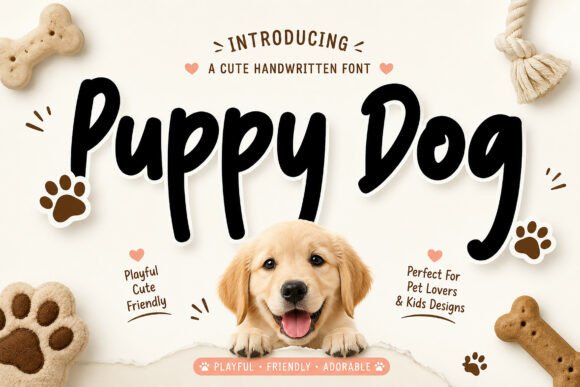
In the crowded landscape of digital experiences, the choice of typeface often determines whether a visitor lingers or bounces. As designers, we constantly search for that perfect balance between professional clarity and emotional connection. Enter Puppy Dog, a charming handwritten font designed to inject warmth and personality into your creative projects. Unlike rigid geometric sans serifs or overly ornate calligraphy, this script font offers smooth curves and bold strokes that feel approachable yet polished. It is an excellent addition to any designer's toolkit for creating brand-focused web experiences that resonate on a human level.
The Visual Personality of Puppy Dog in Digital Layouts
When evaluating a new typeface for a client project, I always look at how it performs under pressure—specifically, how it holds up across different screen sizes and contexts. Puppy Dog stands out because its visual characteristics are optimized for modern typography without sacrificing its playful nature. The font features distinct, friendly letterforms that mimic natural handwriting but with the consistency required for digital rendering. This makes it far superior to many decorative fonts that become illegible when scaled down or viewed on mobile devices.
The bold strokes inherent in the design ensure high contrast against various backgrounds, which is crucial for establishing a strong visual hierarchy. In a typical landing page layout, you need your hero section to grab attention immediately. Using Puppy Dog for a main headline creates an instant focal point that feels organic and inviting. It breaks the monotony of standard corporate web design, signaling to the user that the brand behind the screen is authentic and personable. Whether you are building a boutique online store or a coaching website, this script font acts as a digital handshake, welcoming users with a sense of ease.
Strategic Placement: Headers, CTAs, and Brand Identity
While Puppy Dog is visually striking, it is not intended for body copy. Its primary strength lies in short phrases, logo text, section headings, and call-to-action areas. For instance, on a product landing page, using this display font for the value proposition headline can significantly boost engagement. Imagine a course sales page where the title "Start Your Creative Journey" appears in this warm, handwritten style. It transforms a generic instruction into an encouraging invitation.
Similarly, for online stores, particularly those selling handmade goods, pet products, or children's items, Puppy Dog serves as an ideal accent for promotional banners and sale tags. It adds a layer of trust and friendliness that sterile system fonts cannot replicate. However, restraint is key. Overusing a script font can clutter the interface and reduce readability. The most effective strategy is to pair it with a clean, neutral typeface for the supporting content. This combination allows the personality of the font to shine without overwhelming the user's scanning behavior.
Optimizing Readability Across Devices
One of the biggest challenges with handwritten fonts in web design is maintaining legibility on smaller screens. Fortunately, the design of Puppy Dog accounts for responsive layouts. The characters are well-spaced and distinct, preventing the common issue of letters merging together on narrow mobile viewports. When implementing this font, I recommend testing it on dark backgrounds as well as light ones. The bold weight of the strokes ensures it remains visible even when placed over image overlays or busy textures, provided there is sufficient contrast.
For buttons and interactive elements, Puppy Dog works exceptionally well for primary actions like "Get Started," "Join Us," or "Shop Now." These short commands benefit from the font's energetic vibe, potentially increasing click-through rates by making the action feel less transactional and more conversational. However, avoid using it for navigation menus or footer links where space is limited and clarity is paramount. Stick to using it for high-impact areas where the brand tone needs to be communicated instantly.
Mastering Font Pairing for a Cohesive Look
A great font pairing is the backbone of successful UI design. Since Puppy Dog is a Script Amp category font with a lot of character, it needs a partner that grounds it. The most reliable approach is to pair it with a simple sans serif font for body copy. Fonts like Inter, Roboto, or Open Sans provide the necessary neutrality to let the handwritten headlines pop. This contrast creates a rhythm in the layout, guiding the eye from the playful header to the informative content below.
If you are aiming for a more editorial or sophisticated digital identity, consider pairing Puppy Dog with a classic serif font. This combination blends the warmth of handwriting with the authority of traditional typesetting, making it perfect for lifestyle blogs, portfolio sites, or premium service offerings. The goal is to create a balanced ecosystem where the decorative element enhances the message rather than distracting from it. Always check the included styles and file formats to ensure you have the weights needed for your specific pairing strategy.
Practical Applications for Diverse Projects
The versatility of Puppy Dog extends beyond just headers. It is a powerful asset for logo design, social media graphics, and packaging design concepts presented on websites. For SaaS founders looking to soften their brand image, using this font in marketing emails or blog headers can humanize a tech-heavy product. On a creative portfolio site, it can serve as a signature touch, perhaps used for the artist's name or the titles of featured projects.
Consider a scenario where you are designing a digital brand kit for a startup. Including Puppy Dog as the secondary typeface allows for flexibility in creating varied assets, from Instagram stories to webinar slides. It provides a consistent online identity that feels cohesive across all touchpoints. Whether you are crafting a banner for a summer sale or a welcome message for a new app user, the font's inherent playfulness adapts to the context while maintaining its core charm.
Licensing and Technical Considerations for Web Use
Before integrating any premium font into a live environment, it is vital to understand the licensing terms. As a commercial font, Puppy Dog requires proper licensing for websites, client projects, and online stores. Most reputable foundries offer webfont licenses that allow for embedding via CSS or JavaScript libraries, ensuring fast load times and cross-browser compatibility. Always verify if the license covers unlimited domains or if there are restrictions based on traffic volume.
Additionally, check for multilingual support if your target audience is global. While many script fonts are limited to Latin characters, some versions include extended character sets essential for international markets. Ensuring that your chosen typeface supports the necessary glyphs prevents broken text rendering and maintains the professional quality of your site. By taking these technical steps, you ensure that the aesthetic appeal of Puppy Dog translates into a robust, functional, and legally compliant digital product.
Ultimately, the decision to use a handwritten font like Puppy Dog is about more than just aesthetics; it is about setting the right tone for your audience. In a digital world dominated by sleek minimalism, a touch of genuine personality can make your brand memorable. By strategically applying this font to headers, CTAs, and brand accents, you create a user experience that is not only visually appealing but also emotionally engaging. It is a tool that, when used correctly, turns a simple website into a welcoming destination.